

Affiliate Disclosure
Please note that some of the links on this website are affiliate links, which means that if you click on the link and make a purchase, we may earn a small commission (at no additional cost to you).
We want to assure you that we only recommend products or services that we genuinely believe provide value and benefit to you. Any recommendations or reviews we provide are based on our research and personal experience.
The support we receive from affiliate links helps us to create quality content and maintain this website.
Thank you for your support!
When a Thai curry recipe tells you to cook coconut cream until it releases oil, watch the rim of the pan. The cream thickens first. Then tiny glossy beads appear where the cream meets the metal. That is the moment to stir in the curry paste. Thai cooks call this stage kati taek man (กะทิแตกมัน).
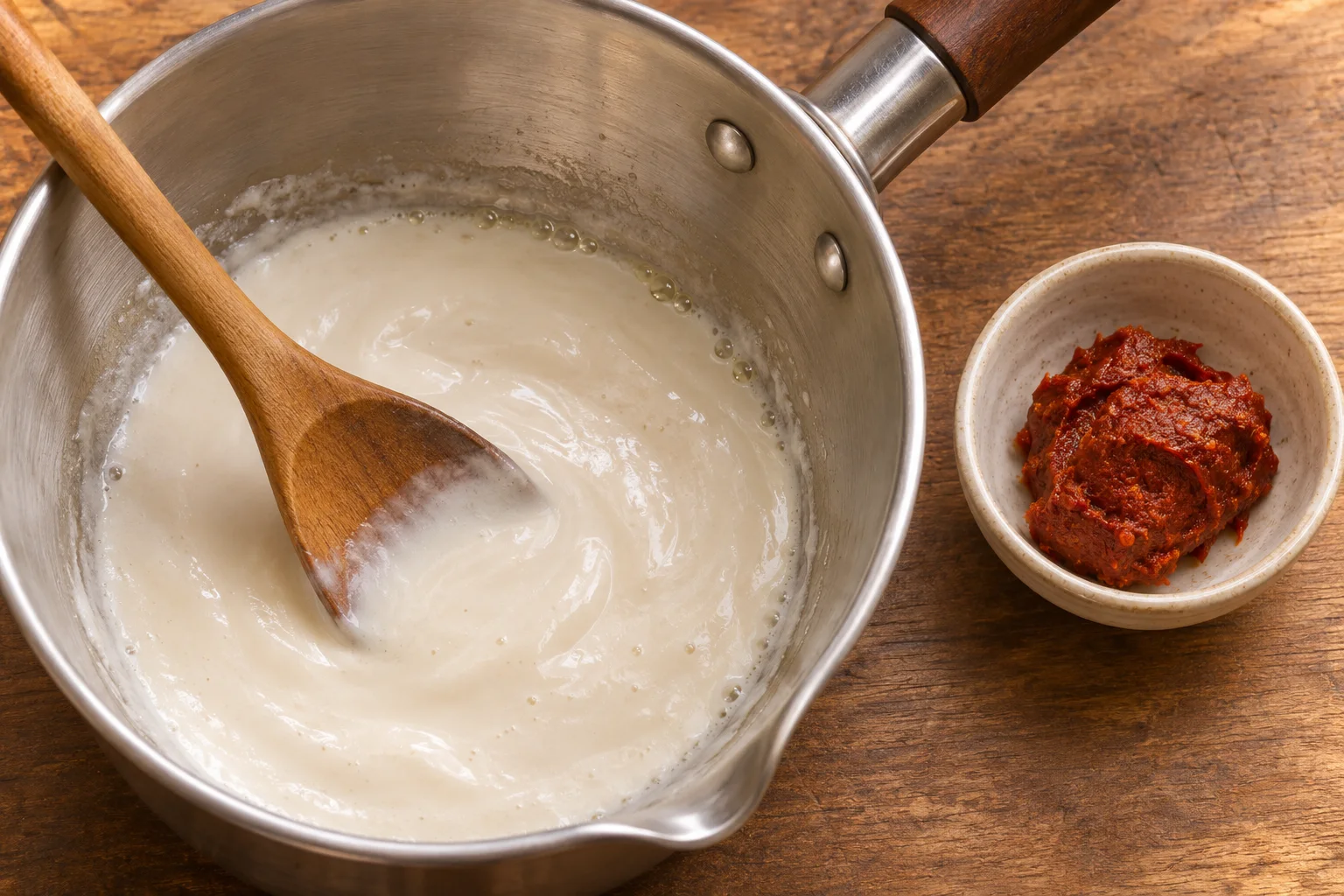
Which part of the can goes in first?
Open a can of unsweetened full-fat coconut milk without shaking it. If a thick white layer has risen to the top, scoop a few spoonfuls into a small pan. Keep the thinner liquid for later. If the milk looks uniform, you can still use it. Some brands use stabilisers that keep the fat dispersed as the milk thickens.
Watch the cream, then listen for the sizzle
- Reduce a small portion. Warm the cream over medium heat. Stir along the base and into the corners. As water evaporates, a spoon drawn through the cream will briefly leave a trail.
- Look at the edge. Bubbles puff up and burst. Oil leaves a shiny spot that stays on the surface after the bubble disappears. A few spots are enough.
- Fry the paste. Stir in the amount your recipe calls for and keep it moving. With red curry paste, the oil takes on a reddish tint. If the paste sticks before it smells fragrant, lower the heat and loosen it with a spoonful of reserved milk.
- Build the sauce. Stir in the remaining coconut milk a little at a time, scraping the fragrant paste from the pan. Continue with your recipe. Try the technique with our panaeng curry with pork.
What if the coconut cream stays smooth?
Once the cream is thick enough to coat a spoon, you can add the paste and keep cooking. If you prefer to fry the paste separately, warm a teaspoon of neutral oil in another pan, stir in the paste until fragrant, then add the reduced coconut milk. Either route lets dinner move forward before the cream catches on the bottom.
A thin sheen on a finished curry is common. At the start you are concentrating a few spoonfuls of cream to fry aromatics. Once the rest of the milk goes in, a gentle simmer gives you more control over the final thickness.
For more on why coconut milk separates, see Hua Hin Thai Culinary School’s explanation.


